
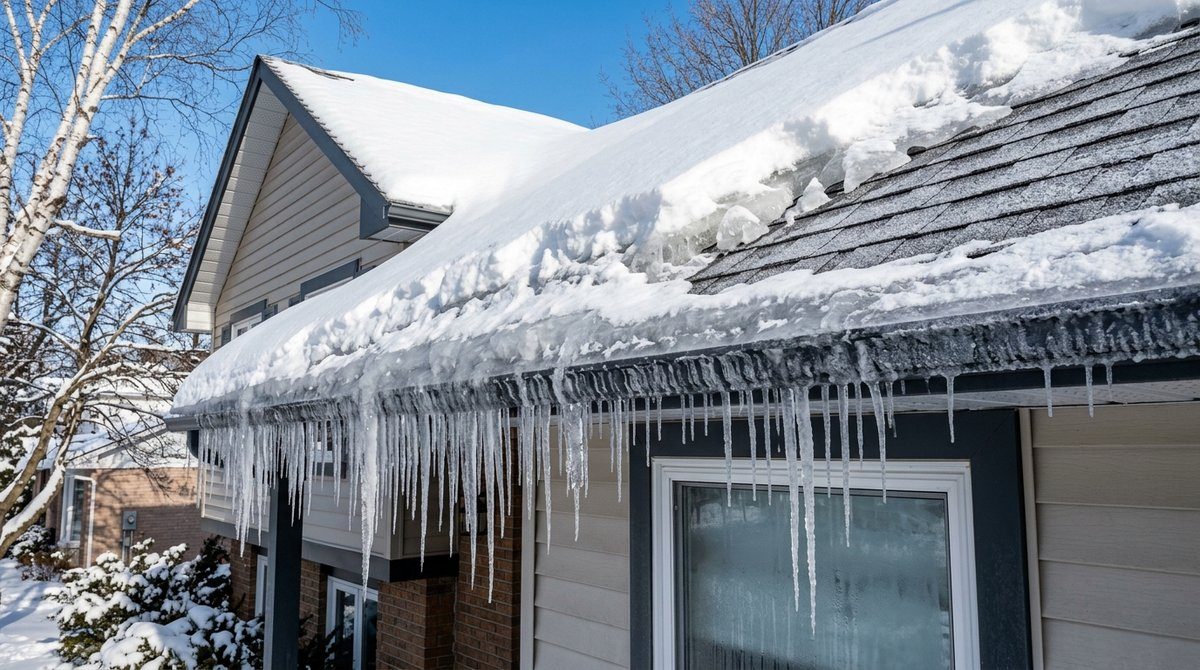
A thick ridge of ice along the eaves, icicles as long as your arm, and then a brown stain spreading across the ceiling near an outside wall. That is an ice dam, and in Calgary, where chinooks melt the snow on your roof and a cold snap freezes it again a day later, they are a common winter problem. Knowing how to prevent ice dams comes down to one idea: keep the roof deck cold and give meltwater somewhere to go.
This guide explains how ice dams form, why Calgary’s weather makes them worse, the warning signs, the permanent fixes in the attic and on the roof, and what you can safely do this winter while you plan the long-term repair.
Table of Contents
- How ice dams form
- Why Calgary’s chinooks make ice dams worse
- Warning signs of an ice dam problem
- How to prevent ice dams: the permanent fixes
- Roof and eavestrough details that limit damage
- What you can safely do this winter
- Ice dam prevention methods compared
- Why Calgary homeowners call Total Exteriors
- Frequently Asked Questions
Key Takeaways
- Ice dams form when heat escaping into the attic melts snow on the upper roof and the water refreezes at the cold eaves.
- The permanent fix is in the attic: seal air leaks, bring insulation up to current levels, and keep soffit-to-ridge ventilation working.
- Eave protection membrane, clear eavestroughs and proper downspouts limit the damage when ice does form.
- A roof rake used from the ground is the safest winter measure; heat cables treat the symptom, not the cause.
- Never chip ice off a roof with a hammer or shovel, and never use rock salt on shingles.
How ice dams form
An ice dam needs three things: snow on the roof, a roof deck that is warmer than freezing over the living space, and eaves that stay below freezing. Heat from the house leaks into the attic, warms the underside of the roof and melts the snow from below. The meltwater runs down the slope until it reaches the overhang, which sits outside the heated walls and stays cold. There it freezes, and over days and weeks the ice builds into a ridge.
Once the ridge is there, more meltwater pools behind it. Shingles shed water running downhill, but they are not designed to hold back standing water, so it backs up under the shingles and finds its way into the attic, the walls and the ceilings. As Natural Resources Canada’s Keeping the Heat In guide points out, a well-sealed, well-insulated attic keeps the roof cool and generally does not get ice dams.
Why Calgary’s chinooks make ice dams worse
In a steadily cold city, snow sits on the roof all winter. In Calgary it does not. A chinook can take the temperature from well below zero to above freezing in hours, melting a heavy snowfall quickly, and the next cold front freezes whatever has not drained away. Every one of those cycles adds another layer to the ice at the eaves.
Calgary’s strong winter sun plays a part too. On a bright day, snow on a south-facing slope can melt even when the air is below freezing, then refreeze on a shaded eave or in a frozen eavestrough. The same freeze-thaw pattern drives attic rain, which our guide to attic rain in Calgary explains; the two problems often share a cause.
Warning signs of an ice dam problem
- A thick ridge of ice along the eaves or in the eavestroughs.
- Large icicles, especially ones with ice behind them on the shingles.
- Snow melting in patches on your roof while your neighbours’ roofs stay white, a sign of heat escaping in those spots.
- Water stains or peeling paint on ceilings and walls near the outside walls, often after a chinook.
- Ice forming on soffits or running down the siding.
- Frost or damp, matted insulation in the attic.
How to prevent ice dams: the permanent fixes
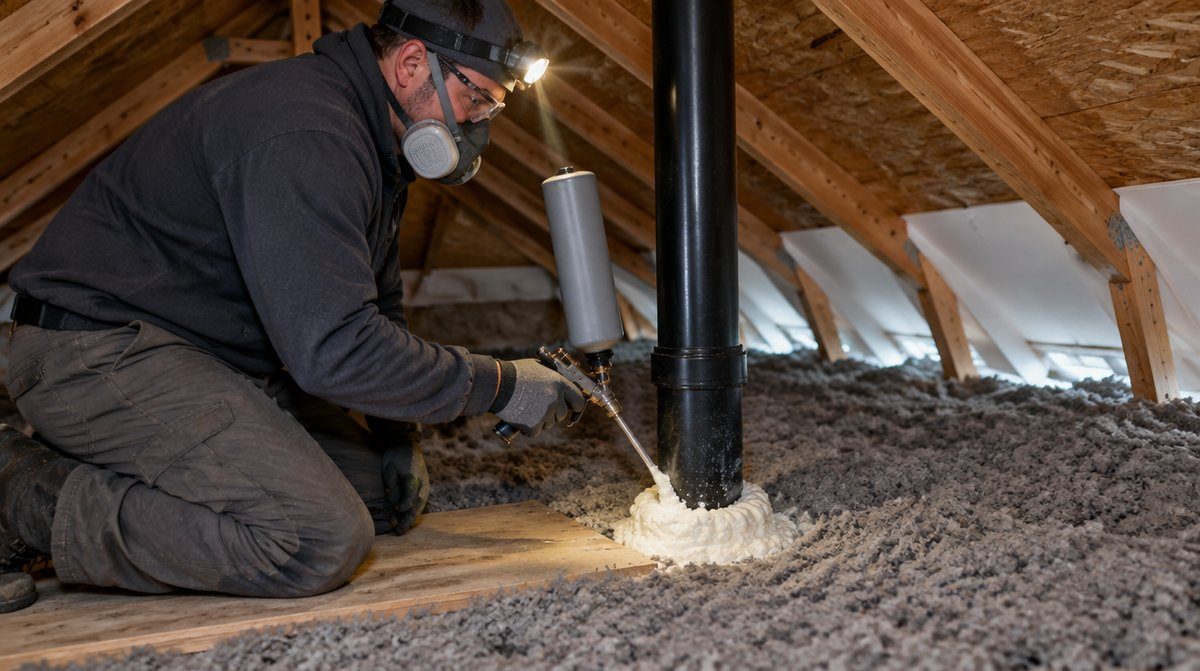
The lasting solution is to stop heating the roof. Work through these in order; each one makes the next more effective.
- Seal the air leaks into the attic. Warm air rises into the attic through the hatch, pot lights, plumbing stacks, wiring holes, chimney chases and bathroom fan housings. Sealing these is usually the single most effective step, and it also cuts heating bills.
- Bring insulation up to current levels. Older Calgary homes often have thin or uneven insulation, especially over the outside walls where the roof meets the ceiling. Even, deep insulation slows the heat that reaches the roof deck.
- Restore attic ventilation. Cold outdoor air should enter at the soffits and leave near the ridge, keeping the roof deck close to the outside temperature. Baffles at the eaves stop insulation from blocking the soffit vents, a very common fault in older attics.
- Vent exhaust fans outside. Bathroom, kitchen and dryer vents must run all the way outdoors, not into the attic, where they dump warm, moist air against the roof.
- Check other heat sources. Uninsulated ductwork or a furnace flue in the attic can create a warm spot on the roof above it.
Air sealing and insulation are usually done from inside the attic, while ventilation involves the soffits and the roof. Getting them right together is what solves the problem.
Ice building up on your eaves every winter? Total Exteriors inspects the roof, soffits, eavestroughs and ventilation together to find out why. Contact us online to book an inspection.
Roof and eavestrough details that limit damage
Even a well-sealed attic can get some ice in a heavy Calgary winter, so the roof itself should be built to cope with it.
- Eave protection membrane. A self-adhered waterproof membrane under the shingles along the eaves stops backed-up water from reaching the deck. The National Building Code requires eave protection on shingle roofs over heated space, extending at least 900 mm up the slope and at least 300 mm past the inside face of the exterior wall. Many older roofs have less than that, and it is only added when the roof is replaced. The Asphalt Roofing Manufacturers Association also recommends it wherever ice dams are a risk.
- Drip edge and flashing. Metal drip edge at the eaves guides water into the eavestrough rather than behind it into the fascia.
- Clear, well-sloped eavestroughs. Leaves and debris left in the eavestroughs in fall freeze into a solid block that becomes the starting point of an ice dam. Troughs should slope toward the downspouts and be clean before freeze-up.
- Downspouts that drain away. Downspouts should discharge away from the house and not onto walkways or driveways, where the water refreezes as a slip hazard.
If your eavestroughs sag, leak at the seams or pull away from the fascia, our guide to eavestrough replacement in Calgary covers the signs it is time to replace them.
What you can safely do this winter
Attic and roofing fixes are best planned for a dry day or the warmer months. Until then, these steps reduce the risk.
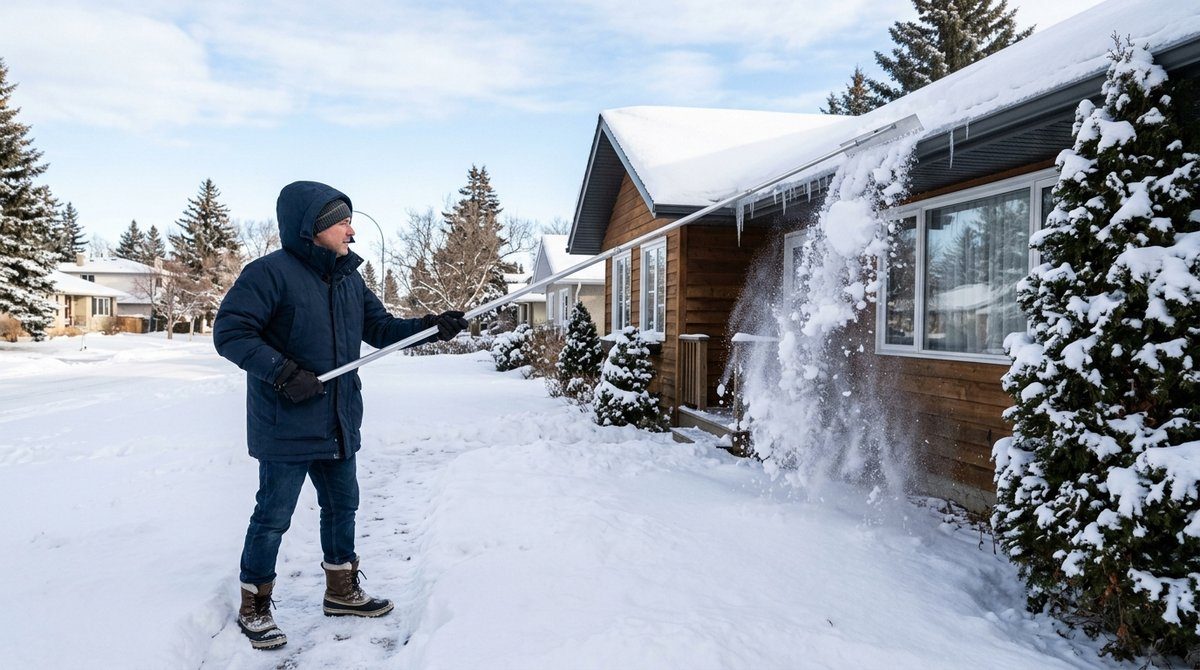
- Use a roof rake from the ground. Pulling the bottom metre or so of snow off the roof after a heavy snowfall removes the fuel for the next ice dam. Stay on the ground, keep clear of power lines, and do not scrape down to the shingles.
- Keep eavestroughs and downspouts clear before the ground freezes, and check them after a chinook.
- Consider heat cables as a stopgap. Heating cables along the eaves and in the eavestroughs keep a channel open for meltwater. They can help on problem areas, but they use electricity, need to be installed according to the manufacturer’s instructions, and do nothing about the heat loss causing the problem.
- Do not chip or hammer the ice. It damages shingles, eavestroughs and flashing, and falling ice is dangerous.
- Do not use rock salt. It can damage shingles, metal and the plants below.
- Do not climb onto an icy roof. If an ice dam is already leaking, call a professional to open channels safely and make temporary repairs.
If water is already coming inside, our guide to winter roof and exterior emergencies covers the first steps, and our emergency call-out service is available 24/7.
Ice dam prevention methods compared
| Method | What it does | Fixes the cause? | Who does it |
|---|---|---|---|
| Attic air sealing | Stops warm air reaching the roof deck | Yes | Professional or experienced DIY |
| Added insulation | Slows heat flow into the attic | Yes, with air sealing | Professional |
| Soffit and ridge ventilation | Keeps the roof deck near outdoor temperature | Yes | Roofing contractor |
| Eave protection membrane | Keeps backed-up water out of the roof | No, limits damage | Roofing contractor, at replacement |
| Heat cables | Keeps a drainage channel open | No, treats the symptom | Professional installation recommended |
| Roof rake | Removes snow before it can melt and refreeze | No, reduces risk | Homeowner, from the ground |
Why Calgary homeowners call Total Exteriors
Ice dams sit where the roof, soffits, fascia and eavestroughs meet, and that is exactly the part of the house we work on. Total Exteriors is a locally owned Calgary exterior contractor handling residential roofing and eavestroughs, soffits and fascia, with licensed and insured crews and a five-year workmanship warranty.
We serve Calgary, Airdrie, Rocky View County, Beiseker, Chestermere, Cochrane, Crossfield and Irricana. If ice dams have already damaged your roof or eavestroughs, we can repair the damage and correct the ventilation and eave details at the same time, and we work directly with insurers when a claim is involved.
Stop ice dams before the next chinook. Book a roof and ventilation inspection with Total Exteriors. Contact us online to get started.
Conclusion
Learning how to prevent ice dams is really about keeping heat in the house and out of the roof. Seal the attic air leaks, bring insulation up to current levels, keep soffit-to-ridge ventilation working, and vent every exhaust fan outdoors. Back that up with eave protection membrane and clean, well-sloped eavestroughs, and use a roof rake from the ground after heavy snow. Calgary’s chinooks will keep testing your roof every winter; a cold roof deck is what lets it pass.
Frequently Asked Questions
What is the main cause of ice dams?
Heat escaping from the living space into the attic. It warms the roof deck, melts the snow above it, and the water refreezes when it reaches the cold eaves. Sun-driven melting on bright days can add to it.
Do heat cables prevent ice dams?
They can keep a channel open so meltwater drains, which helps in problem spots. They do not stop the heat loss that causes ice dams, they use electricity all winter, and they must be installed according to the manufacturer’s instructions.
Will more insulation stop ice dams?
Insulation helps, but only when it is combined with air sealing and working ventilation. Adding insulation that blocks the soffit vents can make things worse, which is why baffles are installed at the eaves.
Is it safe to remove an ice dam myself?
Using a roof rake from the ground to remove snow is reasonable. Climbing onto an icy roof or chipping at the ice is not; it is dangerous and damages the roof. If an ice dam is leaking, call a professional.
Does home insurance cover ice dam damage?
It depends on your policy. Sudden water damage from an ice dam is often covered, while damage that builds up gradually or comes from a known, unrepaired problem may not be. Check with your broker and take photos of any damage.
Are ice dams and attic rain the same thing?
No, but they are related. Ice dams form on the outside of the roof at the eaves, while attic rain is frost inside the attic melting during a thaw. Both are usually caused by warm, moist air escaping into the attic, so the fixes overlap.