
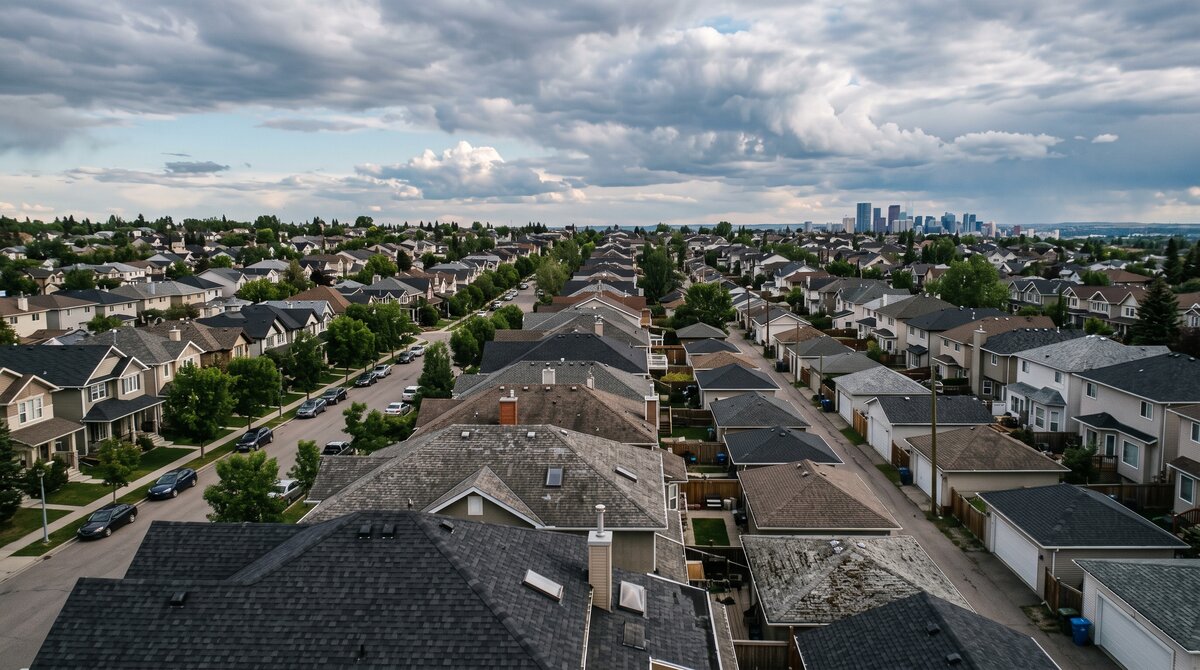
Every roof has a clock running on it, and in Calgary that clock ticks faster than the manufacturer’s brochure suggests. How long a roof lasts depends mostly on the material — anywhere from about 15 years for basic asphalt shingles to 50 years or more for tile and metal — but our hail, chinooks, and freeze-thaw cycles push most roofs toward the shorter end of their range. This 2026 guide breaks down realistic roof lifespans by material for Calgary homes, the factors that shorten them, and how to tell when yours is near the end.
Table of Contents
Key Takeaways
- Standard asphalt shingles last about 15 to 25 years, while metal and tile roofs can last 40 to 50 years or more.
- In Calgary, hail, chinooks, and freeze-thaw cycles commonly shorten a roof’s real lifespan compared with its rated life.
- Proper attic ventilation and regular maintenance are the biggest factors you control in how long a roof lasts.
- A single severe hailstorm can end an asphalt roof’s life decades early.
- Curling, cracked, or missing shingles and granules in the gutters are reliable signs a roof is near replacement.
How long does a roof last? The short answer
A typical asphalt shingle roof in Calgary lasts about 15 to 25 years, while premium materials like metal and tile can last 40 to 50 years or more. The single biggest factor is the roofing material, followed by installation quality, attic ventilation, and how much storm damage the roof takes over its life.
It is important to separate a roof’s rated lifespan from its real one. Manufacturers test under ideal conditions, but Calgary’s climate is anything but ideal — so a shingle “rated” for 30 years may realistically deliver closer to 20 here. Knowing the realistic numbers helps you plan and budget rather than being caught off guard. If you are weighing materials, our guide on standing seam metal roof applications covers the longest-lasting option in detail.
Roof lifespan by material
Different roofing materials offer very different lifespans and price points. Here is what each typically delivers, with Calgary’s climate factored in toward the realistic end of each range.
| Material | Typical lifespan | Notes for Calgary |
|---|---|---|
| 3-tab asphalt shingles | 15-20 years | Most hail-vulnerable; often the shortest-lived |
| Architectural shingles | 20-30 years | More durable; common choice for homes |
| Cedar shakes | 20-30 years | Needs maintenance; fire and rot considerations |
| Metal roofing | 40-70 years | Excellent in snow, hail, and freeze-thaw |
| Tile or clay | 50+ years | Very long-lived; heavy, needs strong structure |
Flat roofing systems common on some homes and most commercial buildings generally last 15 to 30 years depending on the membrane. As the table shows, paying more upfront for metal or tile can mean replacing your roof once instead of two or three times. For a closer look at the most hail-prone option, see our guide to hail damage on asphalt shingle roofs, and for budgeting, our breakdown of the cost of installing a new roof in Calgary.
What shortens a roof’s life in Calgary
Calgary is one of the hardest places in Canada on a roof. Hail is the biggest single threat — the city sits in one of the country’s most active hailstorm zones, and a severe storm can bruise or crack shingles enough to end a roof’s life decades early. Even moderate hail accelerates aging by knocking off the protective granules that shield asphalt from UV.
Chinooks add another stress: rapid temperature swings make roofing materials expand and contract repeatedly, fatiguing shingles and sealants. Add intense summer UV, heavy snow loads, and freeze-thaw cycles that drive ice into small gaps, and Calgary roofs simply work harder than roofs in milder climates. Poor attic ventilation makes all of this worse by trapping heat and moisture. Our chinook damage inspection guide explains that freeze-thaw stress in more detail.
Signs your roof is near the end
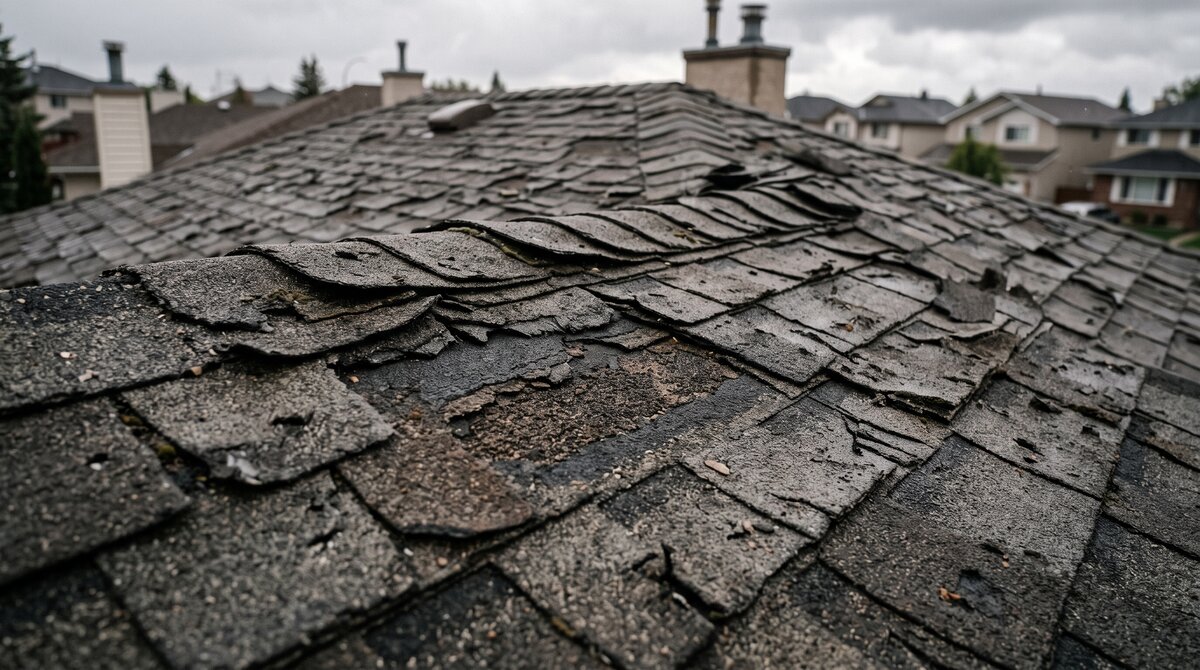
A roof rarely fails all at once; it tells you it is wearing out. The clearest signs include curling, cracked, or missing shingles, bald patches where granules have worn away, and granules collecting in your gutters and downspouts. Inside, water stains on ceilings or in the attic, daylight visible through the roof boards, or sagging areas all point to a roof at or past the end of its life.
Age alone is also a signal: if your asphalt roof is past 20 years, it is worth a professional inspection even if it looks fine from the ground, because Calgary’s climate hides a lot of wear. For a full rundown of what to watch for, see our companion guide on the 9 signs you need a new roof in Calgary.
How to extend your roof’s lifespan
You cannot change Calgary’s weather, but you can get years more out of your roof. The two biggest levers are attic ventilation and regular maintenance. Proper ventilation prevents heat and moisture buildup that cook shingles from below and cause ice dams in winter, while routine inspections catch small problems before they spread.
Practical steps include cleaning gutters so water drains properly, trimming overhanging branches, replacing damaged shingles promptly, and having your roof inspected after major hail or wind events rather than waiting for a leak. After a big storm, a professional inspection is the cheapest insurance there is — our exterior inspection checklist walks you through what to document before calling your insurer.
Why Total Exteriors is the right choice for your Calgary roof
Total Exteriors is a Calgary exterior renovation company specializing in roofing, siding, and windows for homes across the city and surrounding communities. We know Calgary roofs because we work on them every day — through hail seasons, chinooks, and deep-freeze winters — so our lifespan estimates and recommendations are grounded in what actually happens to roofs here, not brochure numbers.
Whether your roof needs a few more years of careful maintenance or it is time to replace, we give you a straight assessment and install materials suited to our climate, from impact-resistant asphalt to long-life metal. Because we handle the full building envelope, we make sure your roof, ventilation, and exterior all work together to last. Locally based and storm-tested, we treat your roof as the long-term investment it is.
Conclusion
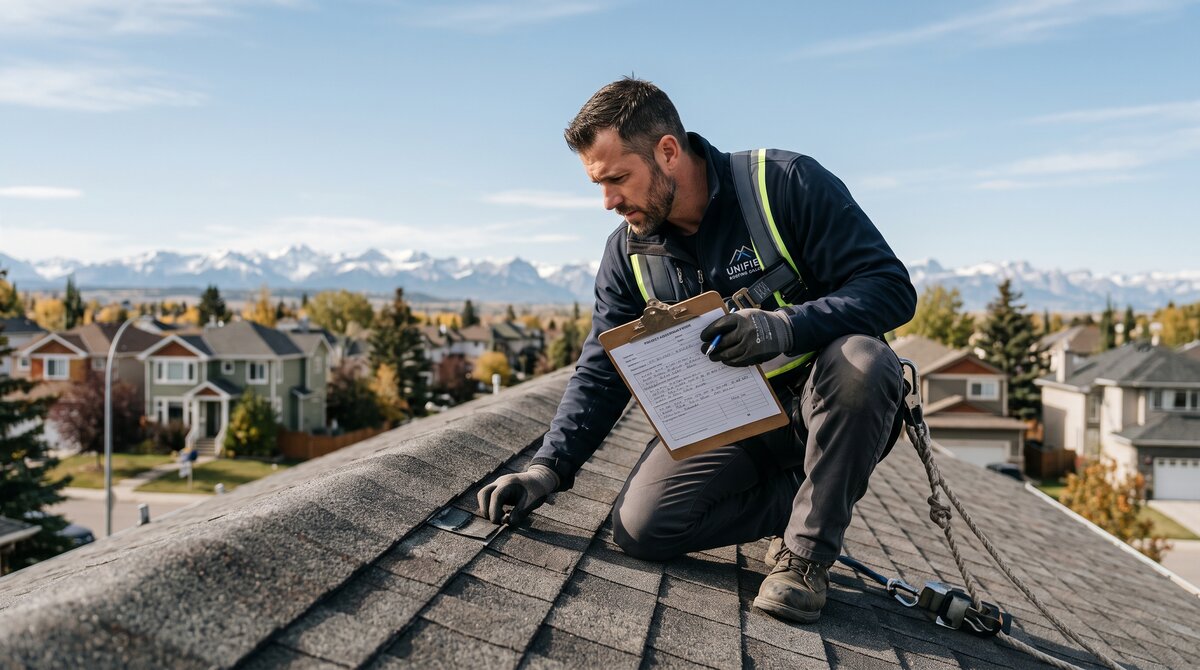
So how long does a roof last? In Calgary, plan on roughly 15 to 25 years for asphalt shingles and 40 to 50-plus years for metal or tile — but expect the climate to push every material toward the shorter end of its range. Hail, chinooks, and freeze-thaw cycles are the deciding factors, and good ventilation and maintenance are your best defence. If your roof is aging or has weathered a major storm, an inspection now is the smartest way to know exactly how much life it has left.
Frequently Asked Questions
How long does a roof last in Calgary?
Asphalt shingle roofs typically last 15 to 25 years in Calgary, while metal roofs last 40 to 70 years and tile can exceed 50. The city’s hail, chinooks, and freeze-thaw cycles usually push each material toward the shorter end of its rated lifespan.
How long do asphalt shingles last?
Basic 3-tab asphalt shingles last about 15 to 20 years, and thicker architectural shingles last 20 to 30 years. In Calgary, hail damage and UV exposure commonly shorten those numbers, and a single severe hailstorm can end an asphalt roof’s life much earlier.
What is the longest-lasting roofing material?
Tile and clay roofs can last 50 years or more, and metal roofing typically lasts 40 to 70 years, making them the longest-lasting common options. Both handle Calgary’s snow, hail, and temperature swings well, though they cost more upfront than asphalt shingles.
What shortens a roof’s lifespan the most?
In Calgary, hail is the single biggest threat, followed by chinook-driven temperature swings, UV exposure, and freeze-thaw cycles. Poor attic ventilation and skipped maintenance accelerate aging further by trapping heat and moisture and letting small problems grow.
How do I know when my roof needs replacing?
Look for curling, cracked, or missing shingles, granules in the gutters, bald patches, and interior signs like water stains or sagging. If your asphalt roof is past 20 years or has taken major hail, have it professionally inspected even if it looks fine from the ground.